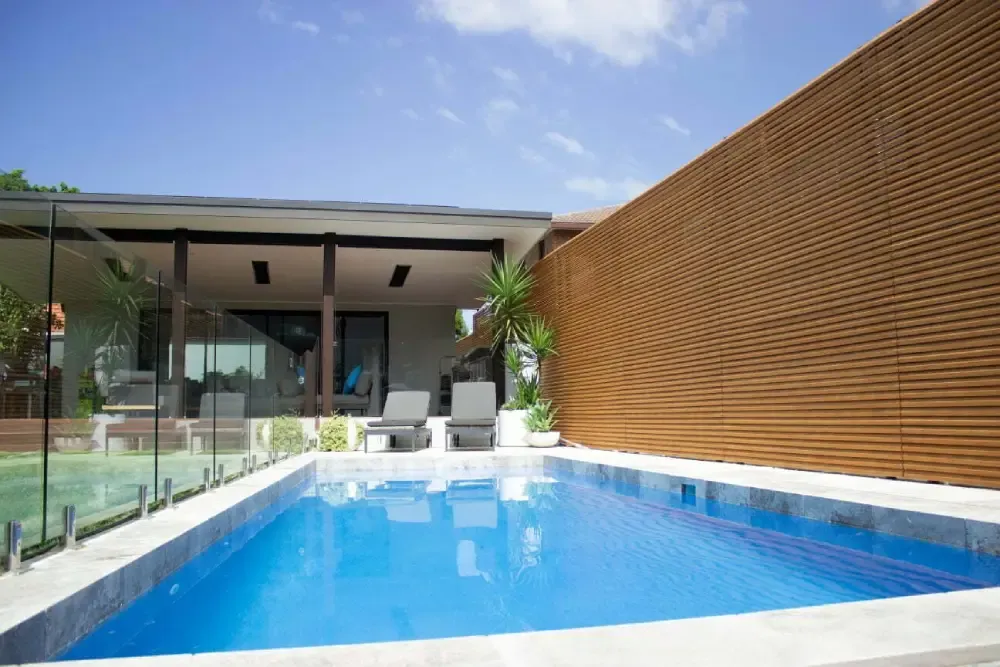
Contemporary architecture relies heavily on timber's warmth and natural beauty to create spaces that feel both sophisticated and welcoming. Yet global timber shortages increasingly disrupt project timelines and budgets, forcing architects and designers to seek alternatives that don't compromise aesthetic vision. Engineered bamboo offers a solution that matches timber's appearance while delivering superior sustainability credentials and reliable availability.

Contemporary architecture relies heavily on timber's warmth and natural beauty to create spaces that feel both sophisticated and welcoming. Yet global timber shortages increasingly disrupt project timelines and budgets, forcing architects and designers to seek alternatives that don't compromise aesthetic vision. Engineered bamboo offers a solution that matches timber's appearance while delivering superior sustainability credentials and reliable availability.
The global timber shortage impacts projects across residential, commercial, and institutional sectors. Architects face extended lead times, unpredictable pricing, and supply uncertainty that makes project planning difficult. This crisis stems from multiple factors—increased demand, climate-related harvest disruptions, and depleted forest stocks that require decades to replenish.
Bamboo presents a fundamentally different supply proposition. As one of the world's most sustainable and plentiful resources, bamboo achieves harvest readiness in five to seven years compared to timber's 20 to 30 year cycle. This rapid regeneration creates supply stability that conventional forestry cannot match.
Modern engineering transforms bamboo from its original tubular form into products indistinguishable from premium hardwood. Everything you envision in timber can now be made with bamboo, offering designers material continuity while addressing supply constraints and environmental concerns simultaneously.
Glued laminated bamboo, commonly called Glubam, represents sophisticated material engineering that unlocks bamboo's architectural potential. The process transforms bamboo's natural cylindrical structure into flat, stable boards that behave like traditional hardwood timber.
Manufacturing begins with mature bamboo culms carefully selected for consistent quality. These are split lengthwise and planed to create flat strips. The strips undergo treatment to enhance durability and dimensional stability, preparing them for the lamination process.
Adhesives bond multiple bamboo strips under pressure, creating engineered boards with remarkable strength and stability. This lamination process eliminates bamboo's natural tendency to split along its length while creating products in dimensions impossible to achieve with natural bamboo poles.
The engineering process creates performance benefits that often exceed solid timber. Dimensional stability improves because lamination counters bamboo's natural movement characteristics. The result is material less prone to warping, cupping, or twisting than many hardwood species.
Strength characteristics rival or exceed premium hardwoods. The dense fiber structure that makes bamboo naturally strong becomes even more consistent through the lamination process. This reliability allows architects to specify engineered bamboo with confidence in performance outcomes.
The perception that bamboo looks distinctly different from timber stems from familiarity with traditional bamboo poles and older bamboo products. Modern engineered bamboo products deliver aesthetics that seamlessly integrate into contemporary design vocabularies developed around timber.
Engineered bamboo accepts stains and finishes similarly to hardwood, allowing color customization that matches design intent. Natural bamboo tones range from light honey to rich caramel, comparable to oak and similar hardwoods. Staining expands the palette to include darker tones resembling walnut or mahogany.
Surface preparation achieves various textures from smooth contemporary finishes to more rustic appearances. This versatility allows bamboo to adapt to diverse design aesthetics, from minimalist modernism to warmer organic styles.
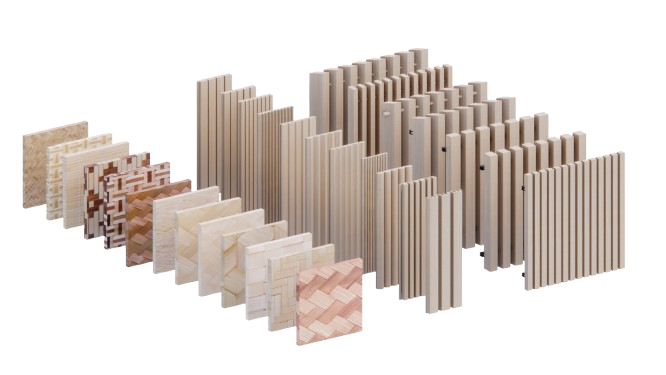
While bamboo's grain differs from timber's growth rings, engineered products can be manufactured to emphasize or minimize these characteristics. Vertical grain orientation creates clean, linear patterns suited to contemporary aesthetics. Horizontal grain showcases bamboo's distinctive nodes, adding subtle visual interest.
The key is matching grain orientation and finish to design intent. House of Bamboo's product range demonstrates this versatility across applications from floors to ceilings, interior to exterior installations.
Engineered bamboo's versatility shines across applications traditionally dominated by timber. Understanding these possibilities helps designers recognize where bamboo can substitute for or enhance conventional material palettes.
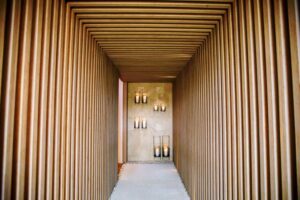
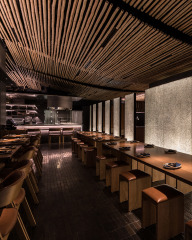
Ceiling applications demonstrate bamboo's ability to create dramatic architectural impact. The SeaChange Collection of battens and screens transforms ceilings into design features that add warmth and acoustic performance. Linear batten systems create rhythm and visual interest while managing sound reflections.
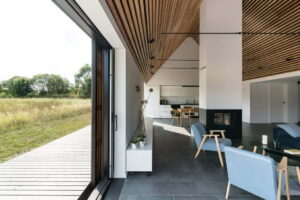
Projects like Wooden House on a Meadow by Ultra Architects showcase ceiling treatments that take spaces to new heights. The timber aesthetic achieved with bamboo battens delivers contemporary sophistication while supporting sustainability goals.
Bamboo cladding brings natural warmth to building exteriors while withstanding weather exposure. Properly treated engineered bamboo provides durability comparable to premium timber cladding species, with dimensional stability that performs well across climate zones.
Contemporary facades benefit from bamboo's clean lines and consistent appearance. The material works equally well in horizontal, vertical, or diagonal orientations, offering design flexibility that adapts to various architectural styles.
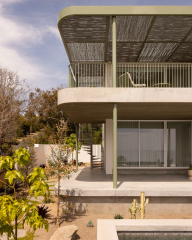
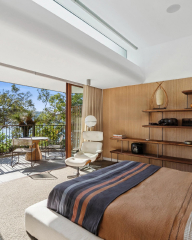
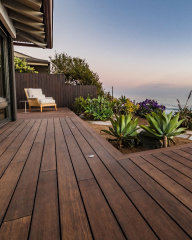
Bamboo decking creates seamless transitions between interior and exterior living areas. House F by Elphick Proome Architects demonstrates this possibility, where Cognac Decking combined with SeaChange battens creates cohesive design language across spaces.
The material's hardness exceeds many timber decking species, providing excellent wear resistance for high-traffic areas. Its natural resistance to moisture and dimensional stability make it particularly suitable for Australian climates where temperature and humidity fluctuate.
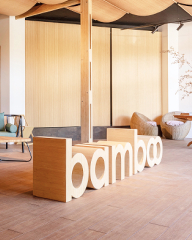
Bamboo flooring delivers the warmth and natural beauty of hardwood with superior hardness ratings. This combination suits both residential and commercial applications where appearance and durability matter equally.
Contemporary interiors benefit from bamboo flooring's clean, consistent appearance. The material accepts underfloor heating systems well and performs reliably in most interior environments when properly specified and installed.
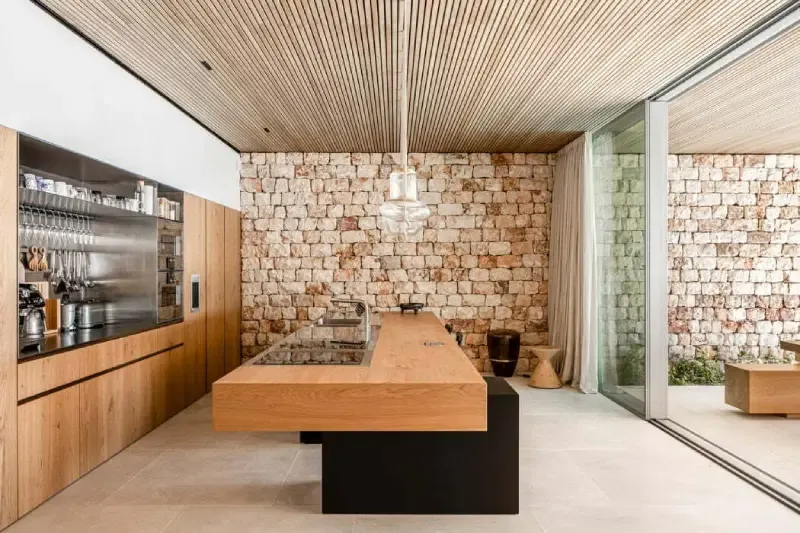
Contemporary design prioritizes clean lines, natural materials, and sustainable practices. Engineered bamboo aligns perfectly with these preferences, offering material properties that enhance rather than compromise modern aesthetics.
Minimalist interiors rely on material quality and subtle variation rather than ornate detail. Bamboo's consistent grain patterns and clean appearance suit this aesthetic beautifully. The material provides warmth without visual clutter, allowing architectural form to take precedence.
Linear applications like batten systems and plank flooring emphasize the geometric precision that minimalist design favors. The material's natural tones complement neutral palettes while adding organic warmth that prevents spaces from feeling cold or sterile.
Contemporary architecture increasingly incorporates biophilic design principles that connect occupants with nature. Natural materials play central roles in achieving these connections, making bamboo particularly valuable for projects prioritizing wellness alongside aesthetics.
Bamboo's authentic natural presence creates stronger biophilic connections than synthetic materials mimicking wood. This authenticity matters physiologically—occupants respond differently to genuine natural materials, experiencing measurable wellness benefits.
Modern clients often want to understand and communicate the sustainability stories behind their projects. Bamboo provides compelling narrative that resonates with environmentally conscious audiences without sacrificing design sophistication.
The material's rapid renewability, carbon sequestration capacity, and minimal environmental impact during cultivation create talking points that enhance rather than excuse design decisions. Sustainability becomes integrate.
Understanding engineered bamboo's technical characteristics helps architects and designers specify confidently. While the material shares many properties with timber, some differences affect specification decisions.
Engineered bamboo generally exhibits superior dimensional stability compared to many timber species. The lamination process counters natural movement tendencies, reducing expansion and contraction with humidity changes. This stability proves particularly valuable in applications where consistent dimensions matter.
However, like all wood products, bamboo responds to environmental conditions. Proper acclimatization before installation and appropriate expansion joints ensure long-term performance. These requirements mirror timber specification practices familiar to experienced designers.
Natural bamboo finishes showcase the material's inherent beauty while requiring periodic maintenance in high-use areas. Factory-applied finishes provide enhanced protection suitable for demanding applications. The choice depends on project requirements and maintenance expectations.
Maintenance requirements generally match or fall below those of comparable timber products. Regular cleaning and occasional refinishing keep bamboo surfaces looking excellent for decades. This durability makes bamboo flooring and bamboo decking investments that serve projects long-term.
Installation techniques for engineered bamboo largely mirror those for timber products. Experienced timber installers adapt easily to bamboo, though familiarity with the material's specific characteristics optimizes outcomes.
House of Bamboo provides detailed installation guidelines and technical support that ensure successful results. This expertise proves valuable particularly for first-time bamboo specifications where guidance prevents potential complications.
Moving from interest in engineered bamboo to confident specification requires hands-on experience with the material. Several approaches help designers evaluate bamboo's suitability for specific projects.
Order samples to assess bamboo's appearance, texture, and finish quality directly. Evaluating samples in actual project lighting conditions reveals how the material will perform aesthetically. This tactile experience builds confidence that photographs and descriptions cannot provide.
Compare bamboo samples against timber alternatives under consideration. Often designers discover bamboo matches or exceeds expectations formed around timber, making the specification decision straightforward.
Examining completed bamboo installations demonstrates real-world performance and aesthetic outcomes. House of Bamboo's projects showcase bamboo across diverse applications, from residential interiors to commercial facades.
These examples reveal how engineered bamboo adapts to various design styles and functional requirements. They provide precedents that help communicate bamboo's capabilities to clients who may be unfamiliar with the material.
Engage with experienced bamboo specialists who understand both material properties and design applications. House of Bamboo's design consultants bring decades of experience matching bamboo products to project requirements. This expertise accelerates specification processes and prevents potential complications.
Consultations clarify technical questions about durability, maintenance, code compliance, and installation. They also explore creative possibilities that leverage bamboo's unique characteristics for enhanced design outcomes.
Several converging factors make this an ideal moment for architects and designers to incorporate engineered bamboo into their material palettes. Understanding these drivers helps position bamboo specification as timely rather than experimental.
Timber supply disruptions show no signs of ending soon. Climate change, increased demand, and depleted forest stocks create ongoing uncertainty that affects project planning and budgets. Bamboo's reliable availability provides supply security that allows confident project scheduling.
Diversifying material specifications across timber and bamboo reduces vulnerability to supply chain disruptions. Projects gain flexibility to adapt as availability and pricing fluctuate across materials.
Corporate and government clients increasingly mandate sustainability performance in building projects. Embodied carbon calculations, green building certifications, and corporate environmental goals all favor low-carbon materials like bamboo.
Specifying engineered bamboo helps projects achieve sustainability targets without compromising design quality. The material contributes to multiple green building rating system criteria while delivering the aesthetic and performance characteristics projects require.
Building codes and procurement policies increasingly favor sustainable materials. Familiarity with bamboo specification positions designers ahead of regulatory curves rather than scrambling to adapt when requirements tighten.
Early adoption builds expertise that becomes competitive advantage. Projects completed now using bamboo demonstrate forward-thinking practice that attracts environmentally conscious clients.
House of Bamboo's engineered bamboo collections deliver the timber aesthetics contemporary design demands while addressing supply challenges and sustainability priorities. The Engineered/Contemporary collection showcases possibilities from subtle elegance to dramatic architectural statements.
Products like the SeaChange Collection of battens and screens demonstrate bamboo's ability to create sophisticated ceiling treatments. Cognac Decking and other flooring options prove bamboo's suitability for high-performance horizontal surfaces. Facades and cladding products show how bamboo brings warmth to building exteriors.
Decades of experience ensure that products perform as promised and that technical support helps navigate specification complexities. This expertise makes bamboo accessible to designers new to the material while serving experienced specifiers seeking reliable supply partnerships.
Browse the Engineered/Contemporary collection for inspiration that demonstrates bamboo's design versatility. Order samples to experience quality directly. Call House of Bamboo design consultants on 1300 665 703 to discuss how engineered bamboo can enhance your projects while supporting sustainability goals and navigating timber supply challenges.